Falling asleep should be a natural process, yet for millions of people it feels like a nightly struggle. You lie in bed feeling tired, but your mind refuses to slow down. Thoughts race, your body feels tense, and sleep seems just out of reach. One of the most effective and natural solutions to this problem is weighted pressure—a scientifically supported method that helps the body relax and transition into sleep more quickly.
Weighted sleep products, including the Nodpod Weighted Sleep Mask, use this principle to help people fall asleep faster without medication. This article explains how weighted pressure works, why it’s effective, and how applying it to the face and eyes can significantly improve sleep onset.
Why Falling Asleep Is So Difficult for Many People
Difficulty falling asleep is often caused by overstimulation of the nervous system. Modern life exposes us to constant stress, artificial lighting, screens, and mental overload.
Common barriers to sleep onset include:
-
Anxiety and stress
-
Blue light exposure
-
Irregular sleep schedules
-
Sensory sensitivity
-
Physical discomfort
When the body remains in an alert state, sleep becomes delayed—even when you feel exhausted.
What Is Weighted Pressure?
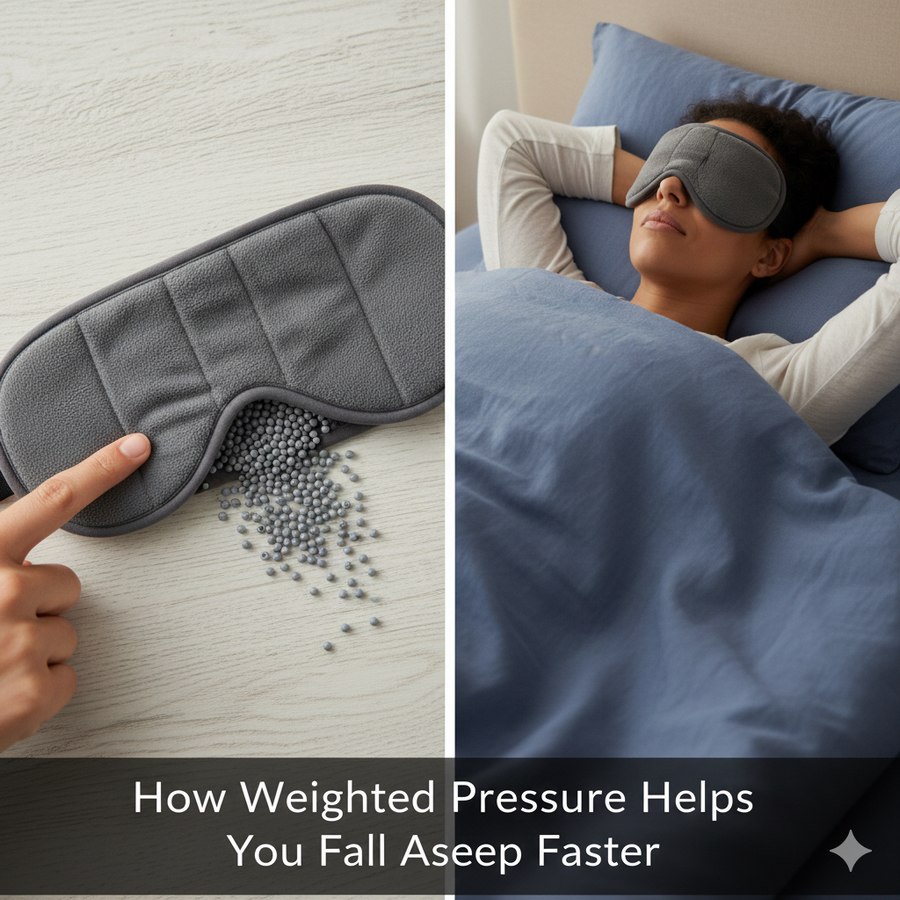
Weighted pressure refers to the application of gentle, evenly distributed weight on the body. This pressure stimulates sensory receptors in the skin and muscles, sending calming signals to the brain.
Weighted pressure is used in:
-
Weighted blankets
-
Compression therapy
-
Deep touch stimulation
-
Occupational therapy tools
-
Weighted sleep masks
The key is that the pressure must be gentle and evenly distributed, not tight or restrictive.
The Nervous System’s Role in Sleep
To understand why weighted pressure helps you fall asleep faster, it’s important to understand the nervous system.
Two Key Nervous System States
-
Sympathetic nervous system
-
Responsible for alertness and stress
-
Activates “fight or flight” mode
-
-
Parasympathetic nervous system
-
Responsible for relaxation
-
Activates “rest and digest” mode
-
When you’re anxious or overstimulated, the sympathetic system dominates. Weighted pressure helps activate the parasympathetic system, allowing the body to relax.
How Weighted Pressure Calms the Brain
Weighted pressure triggers several physiological responses that promote sleep:
1. Reduction in Cortisol
Cortisol is the body’s primary stress hormone. Elevated cortisol levels make it difficult to relax.
Weighted pressure helps lower cortisol levels, making it easier for the body to shift into a sleep-ready state.
2. Increase in Serotonin and Melatonin
Serotonin is associated with feelings of calm and well-being. It also plays a role in melatonin production.
Melatonin regulates your sleep-wake cycle. When melatonin levels rise, falling asleep becomes easier.
3. Slower Heart Rate and Breathing
Weighted pressure encourages slower, deeper breathing and reduces heart rate—both signs of relaxation.
Why the Face Is a Powerful Area for Weighted Pressure
Applying weighted pressure to the face and eye area is particularly effective because:
-
The face contains many sensory nerves
-
The eyes are closely linked to sleep-wake regulation
-
Gentle facial pressure promotes mental stillness
This is why the Nodpod Weighted Sleep Mask focuses specifically on the eye area.
How the Nodpod Helps You Fall Asleep Faster
The Nodpod uses weighted pressure in a way that feels natural and comforting.
Key Design Features
-
Evenly distributed microbeads
-
No tight straps or compression
-
Soft, breathable fabric
-
Flexible structure that adapts to movement
These features allow the pressure to relax the body rather than stimulate it.
Weighted Pressure vs Tight Compression
It’s important to distinguish between weighted pressure and tight compression.
Tight Compression:
-
Can restrict movement
-
May increase anxiety
-
Creates pressure points
-
Often causes discomfort
Weighted Pressure:
-
Feels grounding and soothing
-
Allows natural movement
-
Encourages relaxation
-
Reduces sensory overload
The Nodpod avoids compression entirely, relying on weight instead.
Creating a Faster Sleep Onset Routine
Weighted pressure works best when combined with a consistent bedtime routine.
Suggestions include:
-
Using the Nodpod at the same time every night
-
Dimming lights before bed
-
Avoiding screens for 30–60 minutes
-
Practicing slow breathing
Over time, the brain associates the weighted sensation with sleep, speeding up sleep onset.
Benefits for People With Sleep-Onset Insomnia
Sleep-onset insomnia affects millions of people. Weighted pressure can be especially helpful because:
-
It reduces mental hyperactivity
-
It calms physical tension
-
It provides sensory grounding
Unlike medication, it doesn’t force sleep—it supports the body’s natural process.
How Long Does It Take to Work?
Some people feel immediate effects the first night. Others notice improvement after several nights of consistent use.
Factors that affect results:
-
Stress levels
-
Sleep habits
-
Consistency of use
-
Individual sensitivity
Most users report falling asleep faster within the first week.
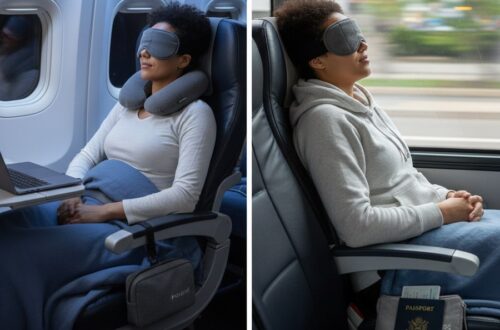
Weighted Pressure for Naps and Travel
Weighted pressure isn’t just for nighttime sleep.
It can also help with:
-
Daytime naps
-
Jet lag
-
Shift work
-
Relaxation breaks
The Nodpod’s portable design makes it easy to use anywhere.
Safety and Comfort Considerations
Weighted sleep masks are generally safe for most people.
They are especially suitable for:
-
Adults
-
Teens
-
Light sleepers
-
People sensitive to tight headwear
Because the Nodpod has no straps, it can be removed instantly if needed.
Final Thoughts
Falling asleep faster doesn’t require medication or complex routines. Sometimes, the body simply needs the right signals to relax. Weighted pressure provides those signals in a natural, gentle way.
The Nodpod Weighted Sleep Mask applies this principle effectively by combining comfort, pressure therapy, and thoughtful design. By calming the nervous system and reducing mental overstimulation, it helps you drift into sleep faster—and stay asleep longer.